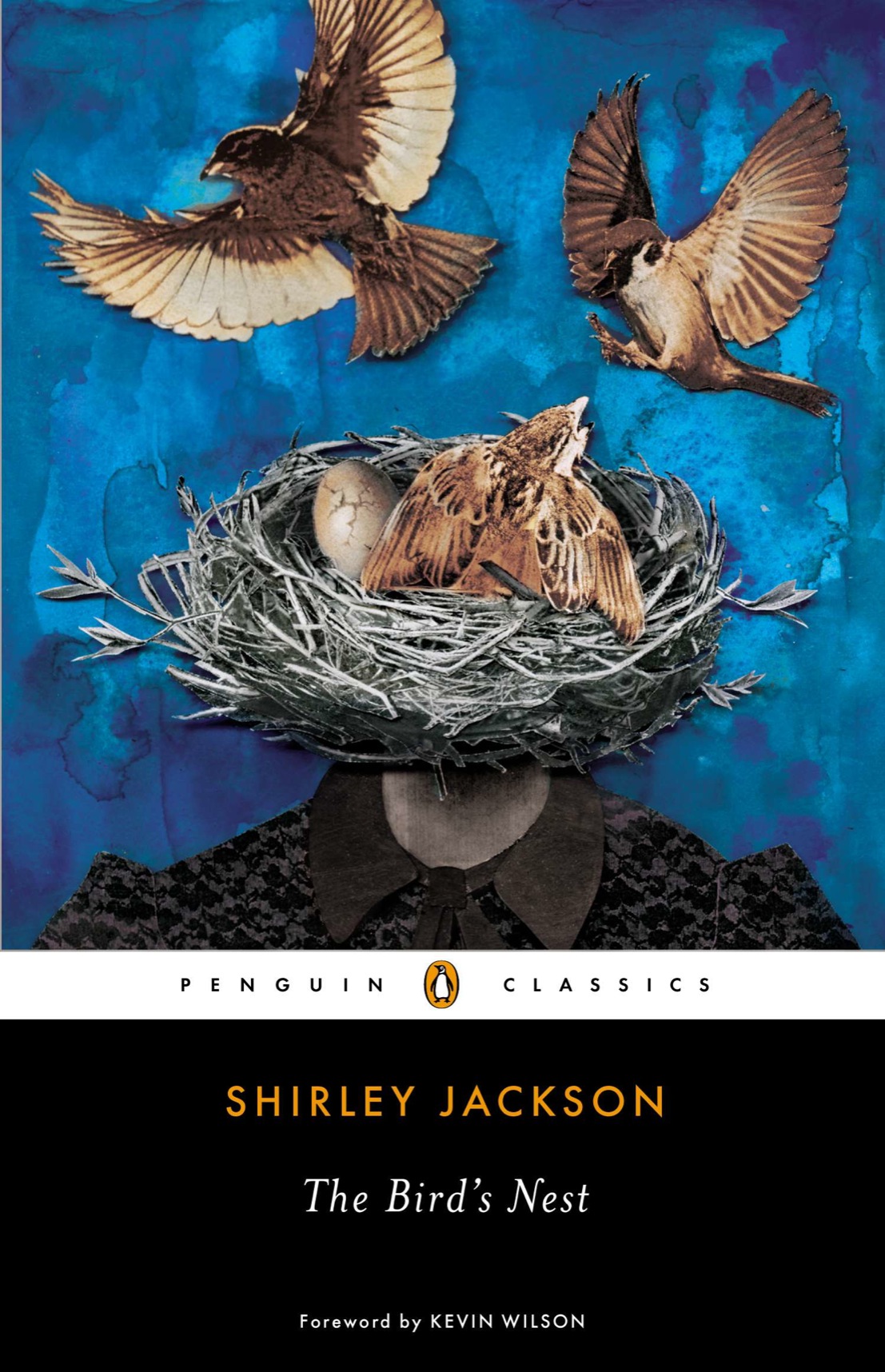
Book Review: The Bird’s Nest by Shirley Jackson
Elizabeth Richmond is, at first glance, a very dull young woman. She lives with her maiden aunt in a small city somewhere in New England in the early 1950s. Elizabeth has a nearly mindless clerical job at the local museum, but has no interest in the exhibits. Emotionally repressed, she has no friends, no hobbies, and her social life consists entirely of being taken along with her Aunt Morgen to visit that person’s small circle of acquaintances.
Elizabeth has long suffered from headaches, back pain, and insomnia with no noticeable physical cause. But things have gotten worse recently. She’s been missing time, suddenly coming to and discovering she’s left the house in the middle of the night, or said something unspeakably rude, or gotten crudely lettered poison pen letters. Her family physician, Dr. Ryan, refers her to his colleague Dr. Wright, who has an interest in hypnotherapy.
Under hypnosis, it comes out that Elizabeth has multiple personalities (what is now called “dissociative identity disorder”.) In addition to the emotionally repressed surface personality Elizabeth (or “Lizzie”), there’s also the sweet but fragile Beth (shades of Little Women), mischievous Betsy (who Dr. Wright mistakes for “the evil personality”), and the deeply hidden Bess. The naming theme is after the “bird’s nest” nursery rhyme Betsy likes.
Dr. Wright feels it’s his duty to get the personalities to integrate (preferably under the umbrella of Beth, the “good” personality) so that Elizabeth can be well. But the alters don’t get along, and Betsy in particular wants to live on her own. When she’s finally able to seize control of the body, she runs away.
This novel was published in 1954, three years before the more famous The Three Faces of Eve. It’s structured in sections from various points of view. First Elizabeth, then Dr. Wright, Betsy, Dr. Wright again, Aunt Morgen and finally an unnamed person. Each gives a bit more information and reveals new facets to the case.
Dr. Wright is notably not a trained psychiatrist, but more of a general practitioner who’s taken a strong interest in using hypnosis to help treat his patients. He’s rather pompous, enjoys his own sense of humor, and is perhaps too hasty in judgement. This last leads to him deciding that Betsy’s the “evil” personality because she’s disrespectful, mischievous, and calls him “Dr. Wrong.”
Once we see things from Betsy’s point of view, it’s obvious she’s not evil, simply bratty. She’s a child masquerading as an adult, which makes the sequence where she runs away to look for her mother in New York City rather harrowing. She’s convinced her mother’s still alive, but hiding from her. And being hopelessly naive, she really has no clue what she should and should not be saying to strangers.
Aunt Morgen has her own problems. While she does love her niece and cares for her, Morgen is still carrying around a huge load of resentment towards Elizabeth’s mother, the much more pretty and popular sister, who’d married the rich, handsome fellow Morgen loved. Morgen’s something of an introvert who’s cut everyone out of her life that she doesn’t get along with, and is not prepared to deal with Elizabeth’s rapidly shifting personalities. Oh, and I am pretty sure the alcoholism isn’t helping.
The museum is actually introduced first. It doesn’t play a large role in the story, but the fact that the building is sagging to one side and has a huge hole in it next to Elizabeth’s desk sets the tone nicely.
A lot of things are never explained coherently. How, exactly, did Elizabeth’s mother die? What happened to her father? What part did “Robin” (the mother’s friend? lover?) play in what happened? How much of Morgen’s memory of Elizabeth’s mother is true, and how much distorted by their bad relationship?
As dissociative identity disorder and its treatment is a controversial subject even now, let alone back in the Fifties, I can’t speak to how realistic the depiction of DID is, and whether the ending is actually a happy one.
While overall interesting, this book isn’t as creepy as Shirley Jackson’s more famous horror tales and is somewhat lacking coherence. Recommended mostly to folks looking for novels about disturbed young women that don’t cross the horror line.
