
Manga Review: Happy Kanako’s Killer LIfe Volumes 1-4 by Toshiya Wakabayashi
Kanako NIshino has had a pretty miserable life until now. She was relentlessly bullied in school, and once she got a job as an office lady, harassed and belittled every day there. Kanako’s boss bullied her into quitting, and then mocked her for being weak enough to fold under pressure. And where is she going to find a job in this economy?
In this first volume, Kanako hits paydirt almost immediately when she accidentally applies to an assassination firm. They’re surprised someone like her would want a job like that, but the benefit package is unusually good. And the test target is her old boss. Kanako’s a bit hesitant, as she’s never killed before and this was a career path she’d never even considered, but as she remembers how her old boss treated her, Kanako’s finger tightens on the trigger, and it’s a clean kill.
Kanako turns out to be surprisingly good at killing people, and quickly overcomes any qualms or jitters about that she initially had. Her new boss is a reserved man who doesn’t share about himself, but is much more kind than she’s used to and believes in rewarding excellence. We also meet her co-worker Sakurai, a grumpy young man who is skeptical about Kanako’s suitability for the work, but doesn’t let that stop him from teaching her the ropes.
One day, Kanako runs into her one friend from middle school, Kiyomi Yoshioka. Kiyomi was a much more popular and at least on the surface more “together” girl and they mostly became friends due to sitting at adjacent desks, but she remembers Kanako fondly. She’s an elementary school teacher now, and the two get reacquainted.
Kanako’s ability to go unnoticed due to erasing her “presence” and impressive list of kills have caused a legend of the mysterious hitman “K” to spread through the underworld. This reaches the ears of police detectives Takehara and Omori, who decide to reopen the “suicide” case of that first boss by interviewing the employee he’d bullied into quitting, Ms. Nishino. They meet their potential witness only briefly, but Takehara is obviously impressed.

The second volume opens with news that there’s been a earthquake. Kanako’s not directly involved, but she does dispose of a fellow who’s been spreading fake rumors of looting (including the real life photo of a random person he found on the internet.)
The cops do a quick interview with Kanako, and she bonds with Takehara over their shared love of sentai shows. They meet again at a live stage show (a bit embarrassing as the target audience is kids), and share a coffee. Kanako worries that he might think of her as a suspect, but it’s pretty clear to the reader that Takehara’s interested personally rather than professionally. Takehara’s partner, Omori, seems skeptical about this.
A particularly fast target leaves Kanako out of breath, so she decides to start physical training, and after a bad experience at a regular gym, winds up sparring with Sakurai. He’s not going easy on her, but he also isn’t treating her differently because she’s a woman, and that’s kind of endearing.
On the other hand, Takehara asks Kanako out on a date, but come the day, Sakurai shows up to claim he’s Kanako’s man. Say what?
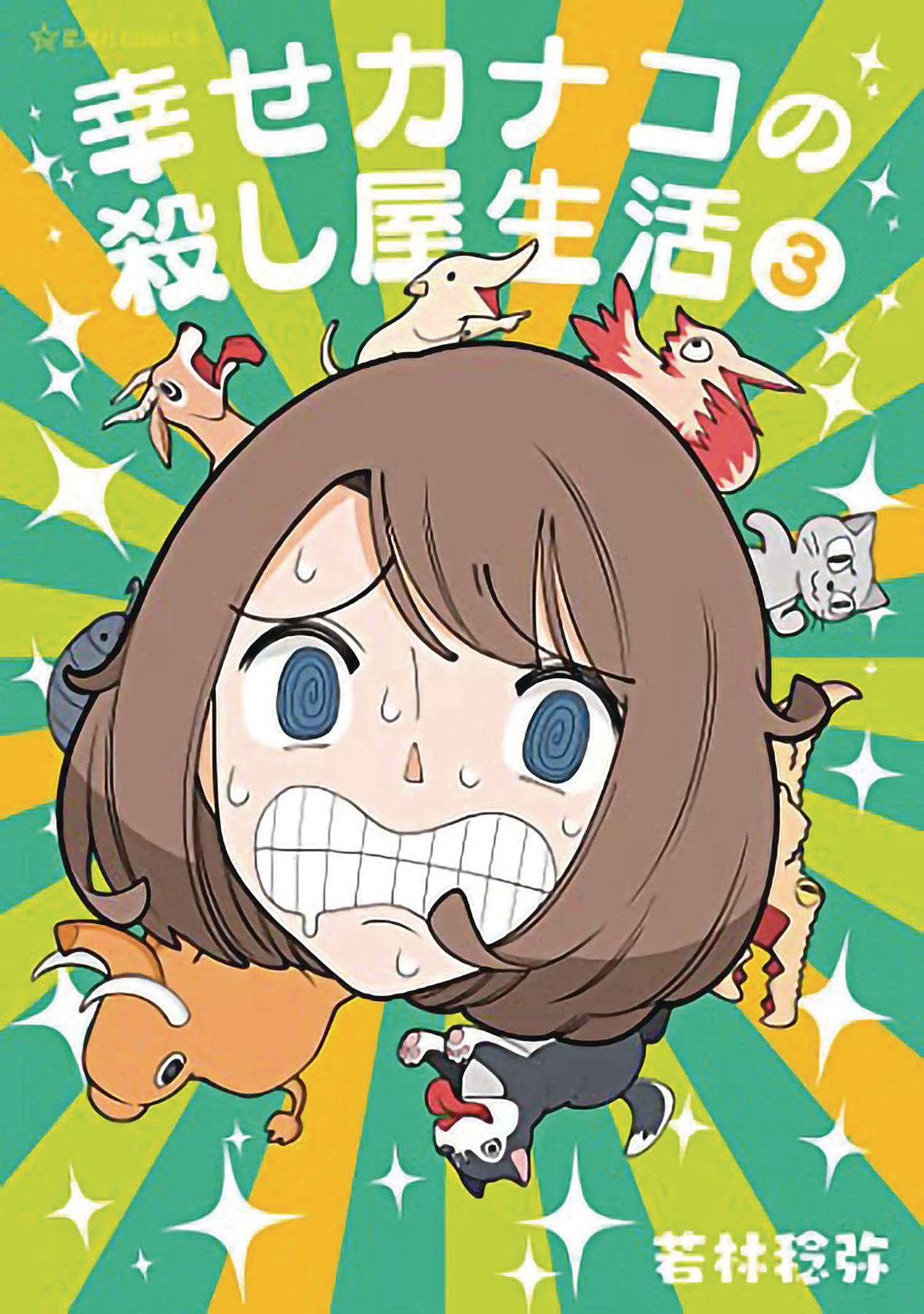
Volume Three opens with Kanako killing another abusive boss, who looks a lot like the one she killed first.
Her current boss is a bit concerned about the police snooping around, and maybe “K” is a bit hot right now, so suggests Kanako take a week’s vacation and visit her mother for the Obon festival. Sakurai tags along out of sight to make sure things stay peaceful.
While she’s in the smaller city, Kanako runs into one of her old bullies from school. The woman’s grown up to be an ordinary housewife with small children, and has completely forgotten how horrible she was to Kanako back then, remembering only that they were classmates. She’s baffled when Kanako gives a heartfelt PSA to the children about how bullying is bad.
We also learn that when she was a teenager, Kanako often thought about committing suicide, even having a box cutter stashed away just in case things ever got too unbearable.
Back in Tokyo, a masked man follows Kanako from her meeting with a yakuza boss, thinking she might be able to give him information on the mysterious assassin “K.” He shoots her in the leg, only to discover that she’s K, and he barely escapes.
Takehara insists on the police guarding Kanako while she’s in the hospital, and also at her apartment while she recovers. This results in her not being able to pursue her job for a month, and also realizing that Omori is interested in Takehara as something more than a colleague.
Finally, the situation is resolved by luring the stalker out and Kanako kills him. But if he’s dead, who’s her new neighbor that looks a lot like the stalker?
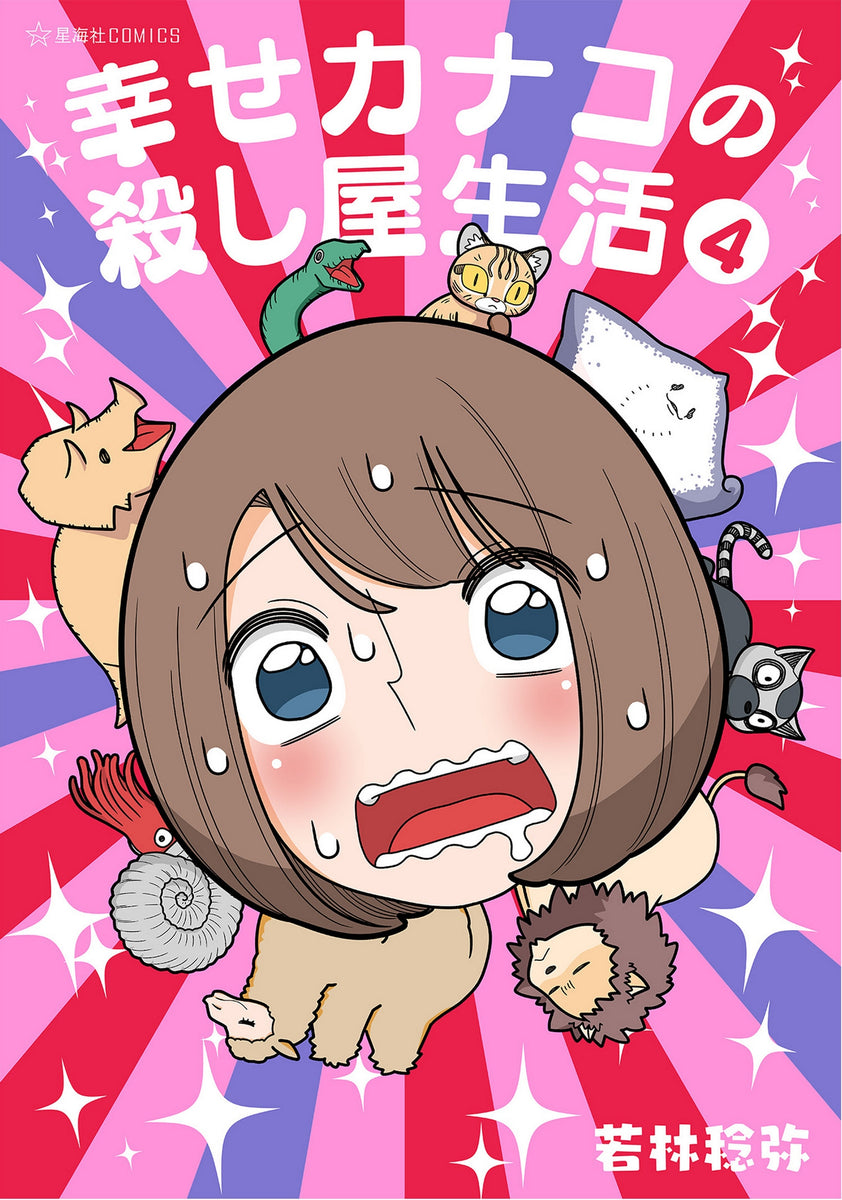
On to Volume 4! Kanako rids a young single mom of an emotionally abusive mother. After giving her client a pep talk, Kanako comes home to her apartment, where she once again runs into her handsome neighbor Hosoda. They run into each other a lot.
Indeed, Hosoda helps her deal with a street stalker non-lethally. Kanako is, perhaps, developing feelings for this fellow, and could he be developing feelings for her?
Kanako considers whether she should wear makeup more often, and considers how social expectations around cosmetics make it difficult for women. No makeup, and you’re lazy. Too much makeup and you’re trying to hide your real face. Expertly applied makeup and you’re trying too hard. Thank goodness she has murder as a stress reliever!
During a police visit to her office, Kanako lets Takehara know she’s not interested in a relationship with him right now, and hints about Omori’s feelings.
Hosoda and Kanako grow closer, and there’s even consideration of marriage. But can an assassin ever truly find love?
This comedy manga initially appeared online, which allowed the use of full color. Kanako suffers from very low self esteem and due to her painful past is socially awkward. Killing people is the only thing she’s ever been really competent at or praised for. It’s not surprising that she wants to continue a job that makes her feel happy for a change. At some point she picked up the habit of thinking in animal puns, and the art shows imaginary animals (and monsters) when she indulges in this. (A neat feature is that different animals are used for English puns than Japanese, so the artist redraws those bits for the translation.)
She’s said to be rather plain-looking and forgettable, which she can weaponize to vanish in plain sight. This makes the men who are genuinely interested in her as a person rather than a female-shaped target stand out.
Sakurai, an orphan basically raised as an assassin by the head of the agency, is prickly and gloomy, but mostly he’s socially awkward in a different way than Kanako. He can be a jerk, and makes death threats way too often, but hasn’t picked up the casual cruelty that many of the targets indulge in.
Takehara is unusually pure hearted for a police officer; you get the sense that he really did join the force to help people and promote justice and has somehow managed to hold on to his ideals. He is, however, also a dumbass who lets his affection for Kanako blind him to some pretty obvious clues. Omori is both attracted to and frustrated by his personality.
Since this is a comedy with an assassin protagonist, you’re going to have to put up with murder being treated very lightly. Kanako’s victims are all criminals or horrible jerks who “deserve” it, even if death seems perhaps a disproportionate punishment for oh, say, a serial butt-slapper. It sometimes comes off as contrived that so many targets feel comfortable as revealing what horrible people they are in ordinary conversation.
Content note: Lots of murder, sometimes with blood. Bullying, sexual harassment, emotional abuse. Thoughts of suicide.
Overall: Cute art, somewhat disturbing premise played for wholesomeness. Recommended for dark comedy fans.
