Movie Review: The Cowboys (1972) directed by Mark Rydell
1877. the Montana Territory. Wil Andersen (John Wayne), an aging, flinty rancher, needs to start his cattle on a drive to Bell Fourche, South Dakota, the nearest railhead. Problem is, a gold strike has been made the other side of Bozeman, and the ranch hands have deserted to take their chances on getting rich. Wil’s tough and hardworking, so he can handle the spread solo with his wife Annie (Sarah Cunningham), but he certainly can’t handle a 1500 head herd for four hundred miles. Much to his disgust, the suggestion of his friend Anse Peterson (Slim Pickens) to hire on the local teenage boys from the schoolhouse turns out to be his only viable option.
It’s true the boys are green and immature, but they have some useful skills, and depths they haven’t plumbed yet. They quickly pick up some of the missing skills, especially Slim Honeycutt (Robert Carradine). One boy, Cimmaron (A. Martinez), is mixed-race and very sensitive about being born out of wedlock. He’s initially dismissed for his violent temper, but rejoins the crew later.
Shortly before the drive is about to start, several grown men appear, looking for a job. Unfortunately, Longhair (Bruce Dern) lies about their references to conceal that they’re fresh out of jail. Wil doesn’t mind ex-convicts, so he says, but can’t abide a liar, so tells them to shove off. Longhair does not take the rejection well.
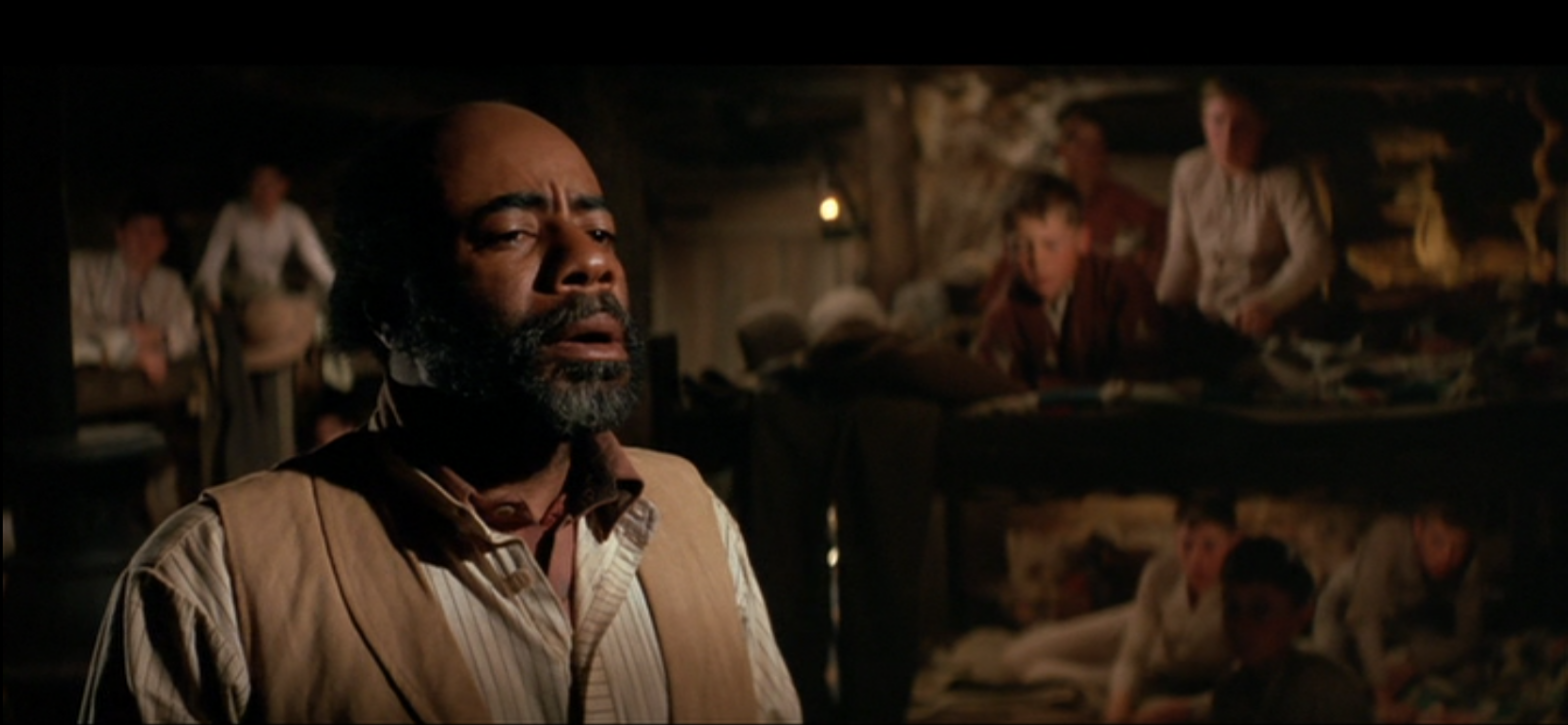
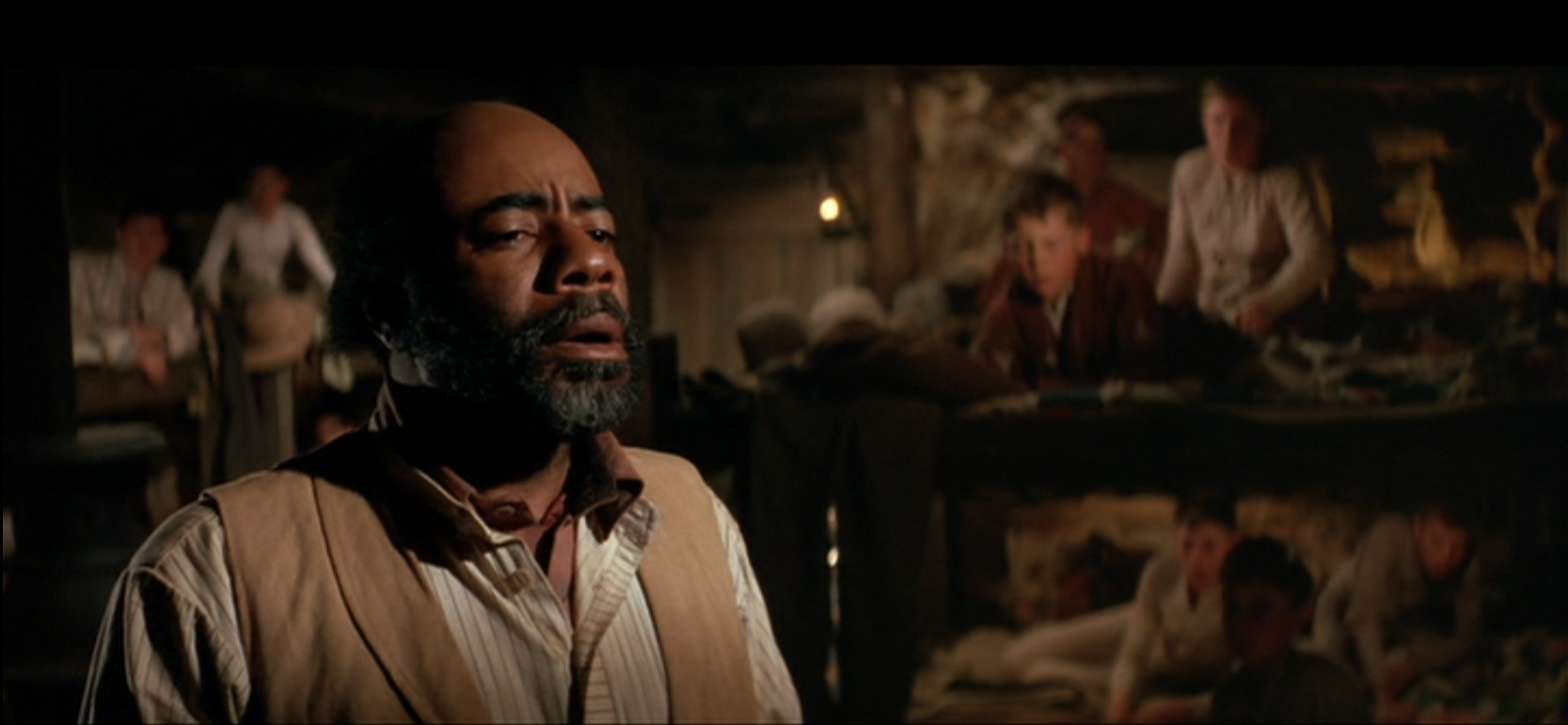
At last, the camp cook arrives. But it’s not the man he had hired, but Jebediah Nightlinger (Roscoe Lee Browne), a black man. He quickly proves himself to be an excellent cook and a good second to Wil, though they stay formal to each other.
The cattle drive begins, and the journey for boys to become men. But not everyone who starts East will arrive there.
This is another classic John Wayne Western, with some great dialogue, wonderful scenery and some surprisingly good acting and riding by the children (several of whom were already rodeo trained, and one or two who went on to rodeo stardom.)
There were some initial worries about the casting of Mr. Wayne, as by this time his strong right-wing views were increasingly out of step with mainstream Hollywood and the director had wanted a more politically compatible actor. But the actor was a professional and it was generally agreed not to talk politics while filming the movie.
One of the movie’s themes is the role of male mentors in the formation of boys into men, and dealing with differences in style and discipline. We learn that Wil Andersen’s own sons died young long ago, and it’s implied that their relationship was not the best. He and Jedidiah Nightlinger butt heads a couple of times about how to handle the children.
Note that this movie has some rather shocking violence that did not go down well with some critics; the boys eventually must defend themselves and avenge their losses by killing. In story, this makes sense but may not be suitable for sensitive viewers.
Content note: Quite a bit of violence, especially in the second half, many deaths, including the death of a child. Wil is more than willing to use physical violence to discipline the boys, though he chooses to be sparing with it. Sexual matters are discussed, and a group of prostitutes appear (nothing physical happens.) Racism, including the N-word. Cimmaron is treated badly due to the circumstances of his birth (and maybe some racism.) A calf is branded. Underage drinking. Some foul language, including a reasonably funny bit from one of the boys. Period sexism: Wil jokingly talks about hiring women, but never considers it seriously, and the schoolgirls are removed from the room when he describes the job to the boys. Teenage boys are likely to be just fine with this movie, but some parental guidance is suggested.
This is a longer movie, over two hours, including musical interlude, so is best for a dedicated movie night. Strongly recommended to Western and John Wayne fans, as well as teenage boys.
