Manga Review: Hell’s Paradise: Jigokuraku 1 by Yuji Kaku
Since time immemorial, humans have sought the secrets of immortality and eternal youth. Medical science has gradually improved people’s chances of living long, healthy lives, but the lure of a quick fix, an “elixir of life” remains strong. Thus, in an alternate 18th Century, when the Japanese shogunate learns of a mysterious island southwest of Okinawa that may possess this secret, the shogun decides that he must have it.
The problem is that most of the people who go to the island never return, and those that do are mostly or entirely transformed into flowers. The shogun decides to send an expedition of powerful but expendable people, a “suicide squad” if you will, to secure the elixir for him.
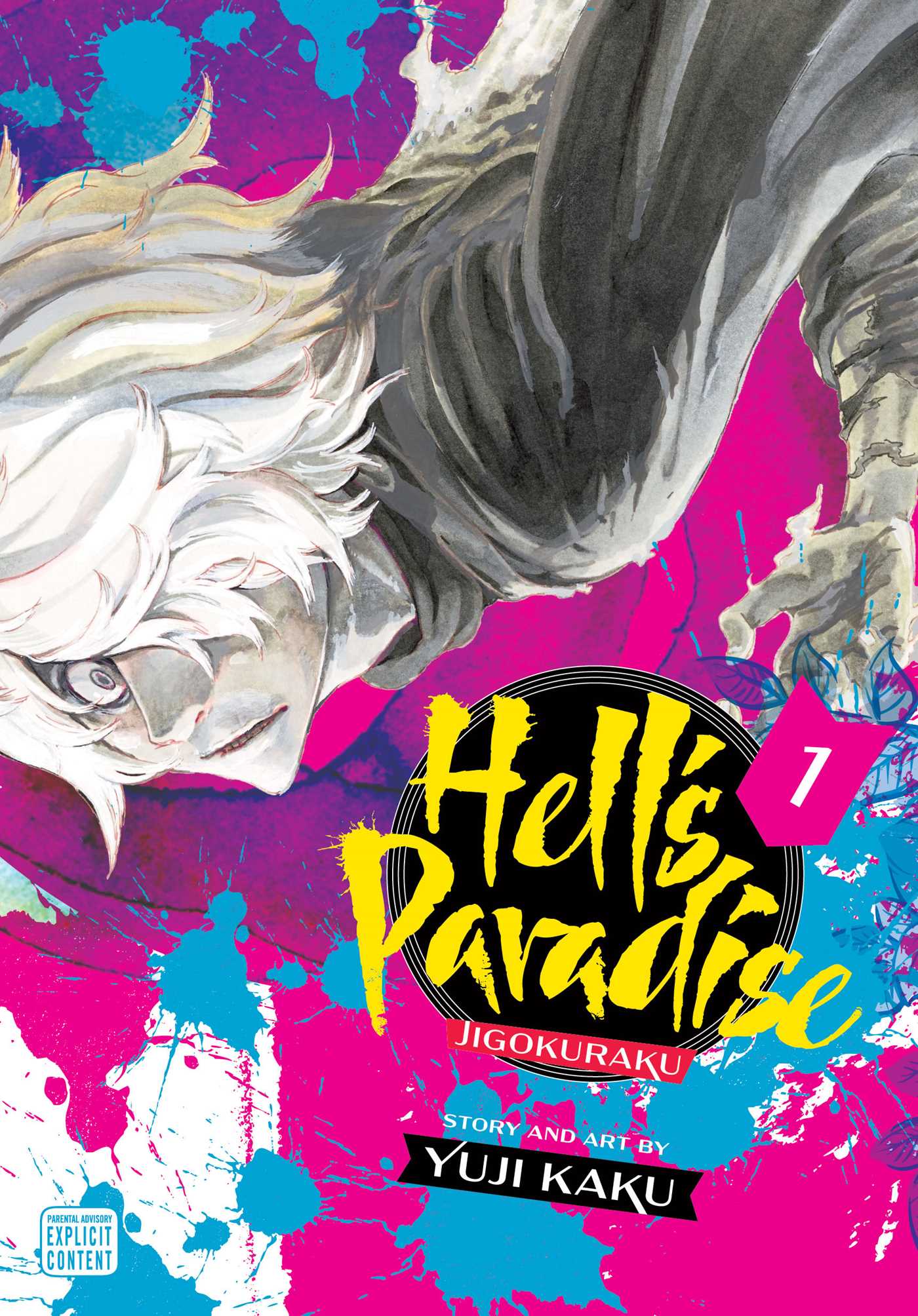
Which brings us to Gabimaru the Hollow, formerly the top assassin of the Iwagakure ninja clan. He tried to resign, whereupon the village chief turned on him, ordering the clan to turn Gabimaru over to the authorities for execution due to his many, many murders done under clan orders. Disheartened, Gabimaru thinks that he’s resigned himself to death, but his body refuses to be decapitated, burned alive or boiled in oil.
The visiting executioner from the Imperial government, Yamada Asaemon Sagiri, suggests that despite his protests, Gabimaru still has something to live for. This turns out to be his wife, who Gabimaru belatedly realizes he actually loves despite the years of training to make himself hollow of emotion. She is reportedly still alive herself, but to return to her, Gabimaru will need to not be under sentence of death anymore.
Sagiri has an offer. If Gabimaru goes to the mysterious island and returns with the elixir of life, then the shogun will issue him a pardon. The odds against are extremely high, but that’s the one way out that the government is willing to provide. It’s time to head to Jigokuraku, Hell’s Paradise.
This manga ran on the Shounen Jump + website from 2018-2021, and has an animated adaptation that so far has run two seasons. The Japanese title is a portmanteau of Japanese terms for the bad place and the good place, so a more literal translation would be something like “Hellven.”
The cast quickly expands as ten death row convicts are selected in a melee combat, and ten executioners assigned to accompany them on the mission to kill them if they break any of the rules. Gabimaru and Sagiri are paired up, naturally.
The initial threat is each other; there’s only one pardon on offer, so the temptation is high to eliminate the competition. One criminal dies before they even reach the island!
The first person to try to take out Gabimaru is Warped Keiun, a warrior monk who specializes in killing other martial artists and taking their weapons. He’s got “living armor” fused to his body…which doesn’t help much.
Then there’s a fight between Gabimaru and Sagiri as having an executioner around is cramping his style. This one’s much more even, as the ninja finds himself subconsciously holding back–and Sagiri is better with a sword than her relatively low rank would seem to indicate. They find themselves drawing inspiration from each other and strike an uneasy truce.
At this point we shift focus to Tamiya Gantetsusai the Blade Dragon, a wandering swordsman who, while he’s killed a bunch of people in duels, was sentenced to death for disrespecting a daimyo by slicing apart the lord’s gate topper. His executioner is Fuchi, a short fellow who dissects corpses to add to his medical knowledge.
Tamiya is most interested in fighting the awesome people he came to the island with, as he wants to battle worthy opponents and become a legend. But this pair is the first to experience the native dangers of the island, first human-faced butterfly wasps, and then a grotesque monster with legs where eyes should be. This is no walk in the park!
I’ve seen the anime, so I know where this series is going, and the first volume is a good sample of what the story is about. Eventually we will have a varied cast of interesting characters, trimmed down from the rather large number of people initially introduced. The art is pretty good, selling the shock value of the violence and horrors going on.
The story will have more varied roles for women than it initially looks like, although all of them provide fanservice at points.
Content note: Lots of gory violence, usually lethal. The abusive training of Gabimaru is briefly touched on. Mutilation. Female nudity, including nipples. Worse stuff happens later in the series. Later teens should be able to handle this, but it’s definitely not for children.
Recommended to fans of gory violence who want the material to touch on deeper philosophical themes about the difference between blind obedience and knowing loyalty.
